
With the U.S. trade show market projected to reach $15.8 billion in 2026, the cost of a visual misstep has never been higher. You’ve likely experienced the frustration of a brand color shifting between your digital proof and the final large format print, or hardware that fails during a critical setup. Professional trade show success is a function of industrial-grade durability and G7-certified color precision, not just portable convenience. High-quality trade show display printing requires a partner that understands the technical demands of the 2026 event landscape.
We agree that your brand deserves a physical presence as sharp as your digital identity. This guide ensures you master the technical and strategic essentials of high-impact displays so your brand stands out with absolute precision. We’ll explore the latest G7+ color standards, the logistics of South Florida venue deadlines, and how to select materials that survive multiple event cycles without degradation. From Heidelberg press technology to local shipping timelines, you’ll gain the insights needed to secure a reliable, high-capacity partnership for your next major event.
Key Takeaways
- Understand the psychology of visual authority and how high-fidelity printing establishes immediate brand trust in a crowded exhibition hall.
- Learn to differentiate between tension fabric systems and industrial-grade retractable stands to ensure your hardware survives multiple event cycles.
- Discover how G7-certified color standards and Heidelberg press technology eliminate color shifting across diverse large format substrates.
- Optimize your booth layout using the “10-5-2” rule of attendee engagement to maximize the ROI of your trade show display printing.
- Leverage local Fort Lauderdale logistics and end-to-end process management to handle last-minute corrections and strict venue deadlines with precision.
Beyond the Booth: The Impact of Professional Trade Show Display Printing
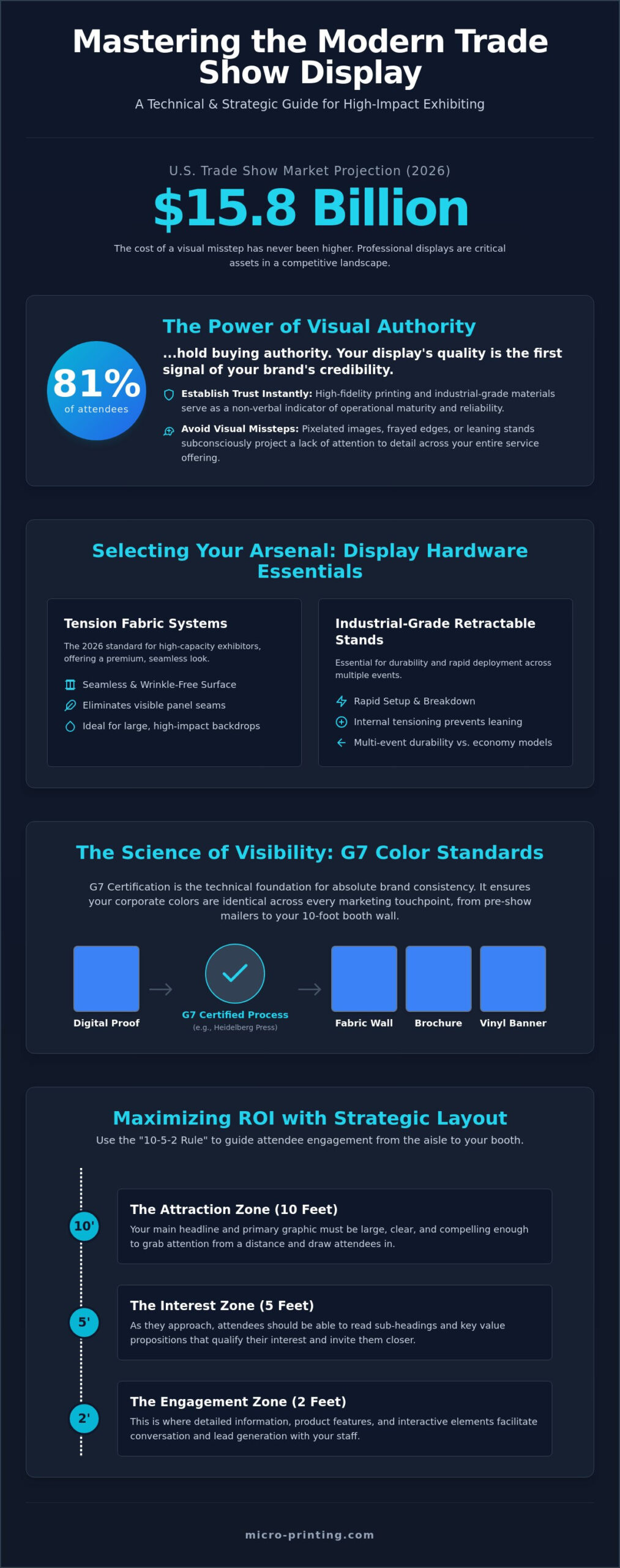
Visual authority is the primary currency of the exhibition floor. In an environment where 81% of attendees hold buying authority, the quality of your physical presence dictates the caliber of leads you attract. Professional trade show display printing serves as a silent but powerful indicator of operational maturity. It’s the first touchpoint of brand trust, signaling to potential partners that your organization invests in precision and long-term stability. Understanding what is a trade show in the modern B2B context involves recognizing it as a high-stakes arena for visual dominance.
Many organizations treat their setups as disposable expenses. This approach creates a cycle of waste and inconsistent branding. We view these displays as industrial assets. Moving to high-fidelity, multi-event materials allows your brand to maintain a commanding presence across multiple years and venues. Large format signage isn’t just a background; it’s a critical component of a data-driven marketing strategy designed to capture a share of the projected $15.8 billion U.S. trade show market in 2026.
First Impressions and Brand Authority
Resolution and material quality serve as proxies for company reliability. A pixelated image or a frayed edge suggests a lack of attention to detail that attendees will subconsciously apply to your services. Brand authority in physical signage is the immediate, non-verbal communication of market leadership through tactile and visual quality. Professional finishing, such as precise tensioning and weighted bases, elevates the perceived value of your entire offering. It’s the difference between looking like a temporary participant and an industry anchor.
Consistency Across Marketing Collateral
Visual fragmentation kills brand recall. Your trade show display printing must be an exact extension of your wider corporate identity. This means your booth graphics must maintain a direct visual lineage with your brochures and catalogs. If your pre-show targeted direct mail used a specific corporate blue, that color must be identical on a ten-foot tension fabric wall. We utilize G7-certified standards to ensure this alignment is absolute. Without this technical rigor, you risk confusing prospects who have already interacted with your brand through other channels.
Selecting Your Arsenal: Essential Trade Show Display Types
Selecting the right hardware for your trade show display printing is as critical as the graphic design itself. Pop-up displays offer traditional structure, but tension fabric systems have become the 2026 standard for high-capacity exhibitors. Tension fabric provides a seamless, wrinkle-free surface that eliminates the visible seams often found in multi-panel pop-ups. For those requiring rapid deployment, retractable banners are essential. The distinction between economy and industrial-grade stands is significant. Industrial stands utilize internal tensioning mechanisms that prevent the leaning effect common in cheaper alternatives, ensuring your graphics remain perfectly vertical throughout the event.
Media engagement often requires specialized backdrops or step-and-repeat banners. These must be finished with matte coatings to prevent camera flash glare. We recommend UV coating and scratch-resistant laminates for any surface prone to high traffic. These finishes don’t just protect the ink; they enhance the depth of the color, meeting the strict G7 color standards established by Idealliance. Custom-printed tablecloths and runners complete the professional aesthetic, providing a finished look to standard venue-provided furniture.
High-Impact Large Format Options
Booth structures dictate whether you need rigid signs or flexible vinyl. Rigid substrates like PVC or aluminum composites offer superior flat-surface stability for mounting, while flexible vinyl allows for curved or wrapped installations. Integrating specialized large format signage production into your strategy involves calculating the optimal square footage for visibility. A common mistake is overcrowding a small booth with too many large elements. Balance is key to maintaining a professional flow. If you aren’t sure which material suits your venue’s lighting, consulting with a technical print partner can prevent costly onsite errors.
Handouts and Supporting Collateral
Lead conversion often happens after the attendee leaves the booth. This is where high-quality catalogs and booklets become indispensable. The tactile experience of paper weight and texture signals brand quality as much as the visual content. For high-value prospects, presenting information in custom-branded presentation folders provides a structured, authoritative package. We utilize heavy-stock covers and precision binding to ensure your collateral feels like a premium asset rather than a disposable flyer. This physical weight reinforces the stability of your corporate identity long after the trade show concludes.
The Science of Visibility: G7 Color Standards and Large Format Precision
Precision in trade show display printing is a matter of colorimetry and mechanical calibration rather than simple aesthetics. Achieving a perfect match between a digital brand guide and a ten-foot backlit display requires a rigorous adherence to G7 color standards. This methodology focuses on gray balance and tonality, ensuring that your corporate colors remain identical whether they’re printed on a business card or a large format vinyl backdrop. Without this technical framework, the “visual fragmentation” mentioned earlier becomes an expensive reality on the exhibition floor.
We utilize state-of-the-art Heidelberg presses to maintain this industrial-grade consistency. While many providers struggle with the technical challenge of matching large format inkjet output to traditional offset printing, our G7-certified workflow bridges this gap. A G7 Master Printer designation guarantees that corporate clients achieve a consistent visual identity across diverse marketing channels by standardizing the gray balance across all print devices. This level of control is essential for rendering deep, rich blacks and smooth vibrant gradients that don’t “break” or show banding in oversized graphics.
The U.S. International Trade Administration guide on trade shows emphasizes that presenting a professional product image is vital for global competitiveness. This professional image relies heavily on the physics of light absorption across different materials. Fabric, vinyl, and paper each interact with ink and ambient venue lighting differently. Fabric tends to soak up ink, requiring specific saturation levels to maintain vibrancy, while vinyl reflects light, which can wash out colors if not compensated for during the pre-press stage. Our process accounts for these variables at the file level, ensuring the final output matches your original intent regardless of the substrate.
High-Resolution Printing for Close-Up Engagement
DPI (dots per inch) requirements change drastically when you move from small handouts to large format displays. A common error is using 72 DPI web images for a backdrop, which results in obvious pixelation that undermines your brand’s authority. In a trade show environment, attendees often stand within two feet of your graphics. This proximity demands high-resolution output and a clear understanding of file types. We prioritize vector files for logos and typography to ensure infinite scalability without loss of detail. For raster images, we require specific high-resolution thresholds to maintain the crispness needed for close-up engagement. This technical rigor ensures that your trade show display printing stands up to the most intense scrutiny from prospects and competitors alike.
- Vector Files: Essential for logos and text to prevent blurred edges.
- Raster Images: Must meet minimum DPI requirements based on the final viewing distance.
- Color Profiles: Standardized to G7 specifications to eliminate substrate-based shifting.
Maximizing ROI: Strategic Layout and Local Logistics
The ROI of your trade show display printing is determined by how effectively your layout converts floor traffic into qualified leads. We utilize the ’10-5-2′ rule of attendee engagement to guide our structural recommendations. From 10 feet away, your hero display must communicate a single, powerful brand message. At 5 feet, your secondary signage should highlight specific value propositions. Finally, at 2 feet, high-resolution details and tactile collateral close the engagement gap. This tiered approach prevents visual clutter and ensures your message is legible from every approach angle in the hall.
Strategic Booth Flow and Signage Placement
Maximizing visibility requires claiming vertical space through strategic trade show display printing. Hanging banners and tower displays are essential for being seen across a crowded convention floor. On the ground level, floor graphics provide a high-impact way to direct traffic and define your booth’s perimeter. Integrating QR codes into your printed displays allows for a seamless transition from physical presence to digital follow-up. This interaction provides measurable data on which display elements are driving the most engagement. It’s a precise way to audit your booth’s performance in real-time.
South Florida Logistics and Turnaround
Exhibiting in Fort Lauderdale offers distinct advantages when you work with a local commercial printing partner in Florida. Proximity to the Broward County Convention Center eliminates the risk of shipping delays and simplifies the often-complex drayage process. If a graphic is damaged during setup or a last-minute change is required, local production capacity allows for rush orders that national vendors can’t match. We provide on-site support and local pickup options to ensure your materials arrive in pristine condition, exactly when the loading dock opens.
Longevity is the final component of ROI. Multi-show display success depends on proper storage and maintenance. We recommend using padded shipping cases and avoiding tight folds on tension fabrics to prevent permanent creasing. If you’re planning a multi-event circuit in 2026, contact our logistics team to coordinate your production schedule. This proactive management ensures your assets remain in industrial-grade condition for years of service.
Custom Trade Show Solutions by Micro Printing
Micro Printing delivers a level of industrial precision that smaller providers cannot replicate. Since 1989, we’ve focused on building a high-capacity infrastructure designed to meet the rigorous demands of the corporate sector. Our commitment to trade show display printing is rooted in technical excellence, specifically our adherence to G7 color standards. This certification isn’t just a badge; it’s our promise that your brand colors will remain consistent across every substrate, from fabric backdrops to high-gloss posters.
We provide end-to-end management that covers the entire lifecycle of your project. This includes everything from the initial structural design to the final finishing touches. By maintaining a state-of-the-art facility in Fort Lauderdale, we serve as a stable, large-capacity partner for clients both locally and nationwide. Our family-owned expertise ensures a level of accountability and professional continuity that is essential for long-term B2B partnerships. We don’t just deliver products; we provide the technical background and results that prove our market position.
State-of-the-Art Technology for Your Brand
Our facility centers around Heidelberg press technology, the gold standard for high-fidelity output. These presses allow us to handle high-volume and complex custom requirements with predictable accuracy and speed. Beyond the initial print, our specialized finishing services include precision die-cutting and UV coating. These processes don’t just add aesthetic value. They provide the industrial durability needed for multi-year use in high-traffic environments. Whether you need folding cartons for booth giveaways or massive large format signage, our equipment park is calibrated for total process control.
Partnering for Your Next Event
Starting a project with us involves a direct consultation with our design and engineering team. We don’t just take orders. We provide a consultative approach to material selection and durability. We evaluate your specific venue conditions, lighting requirements, and shipping needs to recommend the most resilient substrates. This methodical preparation eliminates the risks of hardware failure or color shifting during your event. Our team manages the technical complexity so you can focus on your booth’s performance. To secure industrial-grade precision for your 2026 exhibition schedule, Contact Micro Printing for a custom trade show display quote. We are ready to translate your brand’s authority into a physical reality.
Securing Your Brand’s Visual Dominance in 2026
Success on the exhibition floor is a result of technical rigor and strategic asset management. By transitioning from disposable setups to industrial-grade displays, you ensure your brand maintains a commanding presence throughout the 2026 event season. Professional trade show display printing is the foundation of this visual authority. It bridges the gap between digital identity and physical impact. We’ve explored how G7 color precision and local Fort Lauderdale logistics work together to maximize your ROI and eliminate operational risks.
Micro Printing provides the stability and capacity required for high-stakes B2B environments. With 35+ years of South Florida expertise, our G7 Master Printer Certification and Heidelberg press precision guarantee absolute brand consistency. We manage the entire lifecycle of your project, from structural design to final finishing, ensuring your display survives the rigors of the convention circuit. It’s time to partner with a team that understands the intersection of industrial durability and visual fidelity.
Request a Professional Trade Show Printing Quote to secure your next event’s success. Your brand deserves the precision of a proven industry leader.
Frequently Asked Questions
What is the best material for a trade show backdrop?
Tension fabric is the industrial standard for 2026 backdrops due to its wrinkle-resistant properties and matte finish. It eliminates the glare from harsh convention center lighting that often washes out vinyl alternatives. While vinyl remains a durable choice for outdoor events, tension fabric provides a seamless, high-fidelity aesthetic that is easier to transport and install during tight setup windows.
How long does it take to print a full trade show booth setup in Fort Lauderdale?
Standard production for a comprehensive booth setup typically requires 5 to 7 business days following final file approval. This timeline ensures sufficient room for precision printing, specialized finishing, and our internal quality control protocols. We recommend initiating your trade show display printing project at least two weeks before your move-in date to account for venue-specific logistics and material sourcing.
Can you match my specific Pantone brand colors on fabric banners?
Yes, we utilize G7-certified color management to achieve precise Pantone matching on fabric substrates. Our technical workflow accounts for the specific ink absorption rates of polyester blends to prevent the color shifting common in lower-grade setups. This ensures your large format banners maintain absolute visual consistency with your corporate brochures, catalogs, and other marketing collateral.
What is G7 certification and why should I care for my trade show displays?
G7 certification is a global standard for ensuring visual consistency across different printing processes and materials. It focuses on gray balance and tonality to bridge the gap between digital designs and physical output. For your displays, this means your brand colors will look identical whether they’re printed on a fabric wall, a vinyl floor graphic, or a paper booklet.
Do you offer rush printing for events at the Broward County Convention Center?
We provide expedited production services for exhibitors at the Broward County Convention Center and other South Florida venues. Our local facility allows us to handle last-minute signage corrections or urgent retractable banner orders that national vendors can’t fulfill. Local pickup and delivery options further eliminate the risk of shipping delays or drayage complications during major shows.
How do I prep my files for large format trade show printing?
Submit your files in high-resolution PDF format with all fonts outlined and images embedded. Vector files are mandatory for logos and typography to ensure infinite scalability without pixelation. For large backdrops, raster images should be a minimum of 100 to 150 DPI at 100% scale. This ensures your trade show display printing remains sharp even when attendees stand within two feet of your booth.
What is the difference between a pop-up display and a tension fabric display?
Pop-up displays utilize a collapsible frame with separate panels attached via magnetic strips, which can sometimes result in visible seams. Tension fabric displays use a single, pillowcase-style graphic that stretches over an aluminum tube frame for a seamless look. Fabric systems are generally more durable for multi-year use and are significantly lighter, reducing your long-term drayage and shipping costs.
Do you provide supporting handouts like catalogs and brochures as well?
We offer a complete range of supporting collateral, including high-capacity production of catalogs, brochures, booklets, and presentation folders. Our facility uses Heidelberg presses to ensure these handouts meet the same industrial precision as your larger displays. This end-to-end management allows your brand to maintain a unified visual authority across every physical touchpoint in the exhibition hall.